Ocean Technology Education (OTEC)
Strategic Partnerships Committee
The goal of the OTEC subcommittee is to gather, organise and make accessible information about marine technology and associated resources that support marine science education. This committee will use the seven ocean literacy principles as a guide to define the scope of ocean technology in education and build out case studies that provide a scaffolding for its applications.
Ocean technology includes any tool and/or innovative method that helps humans better understand, explore, measure, move within oceans, in an effort to protect and interact with the ocean. For the purposes of this committee, we choose to only include those technologies that support sustainable interactions with marine ecosystems. These types of technology fit into the following categories:
- Vehicles/equipment used to sample/gather data:
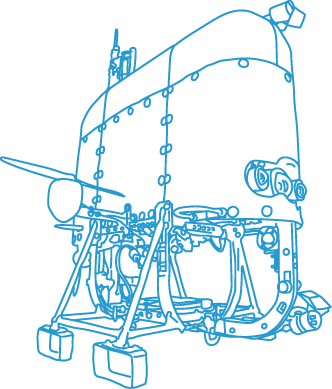
- Underwater submersibles including Remotely Operated Vehicles (ROVs), Autonomous Underwater Vehicles (AUVs), Human Operated Vehicles (HOVs), Gliders and Floats
- Surface vessels including Human Operated surface vehicles(HSOVs), Autonomous Surface vessels (ASVs) and Research vessels (RVs).
- Diving gear like SCUBA and compressed oxygen
- Instruments and sensors that gather data and are used to monitor or model ocean conditions.
- Sensors measuring ocean chemistry parameters, predicting wave or sea surface height, monitoring water flow, sensing environmental DNA, sampling water along the water column and more.
- Imaging using cameras or SONAR to aid with mapping and exploration.
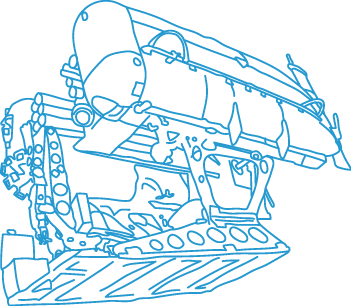
- Stationary equipment that hosts instruments, sensors and other payloads to understand and measure the ocean.
- Buoys or oceanographic moorings can be affixed with GPS, communications and sensors to better understand the ocean.
- Software that helps to organise and understand ocean data so that people can make well informed decisions about how to plan for activities in the ocean.
- GIS to map, analyse and organise information about the ocean and how it’s used.
- 3D modelling software for the development of tools used in ocean technology.
- Online data portals that allow scientists to develop comprehensive data sets and share that information with others.
Data gathered from tools used to study the ocean may be used in all facets of marine science from exploration and research, environmental monitoring and conservation, marine and offshore industries, and climate change and human impacts. The intent of OTEC is to integrate technology into lessons and/or curate lessons about these applications, building a bridge between engineering/technology and science/understanding.
Download the OTEC one-page information flyer here.