USA Blue Schools 2024-2025 Annual Report: Growing Ocean Literacy Through Action
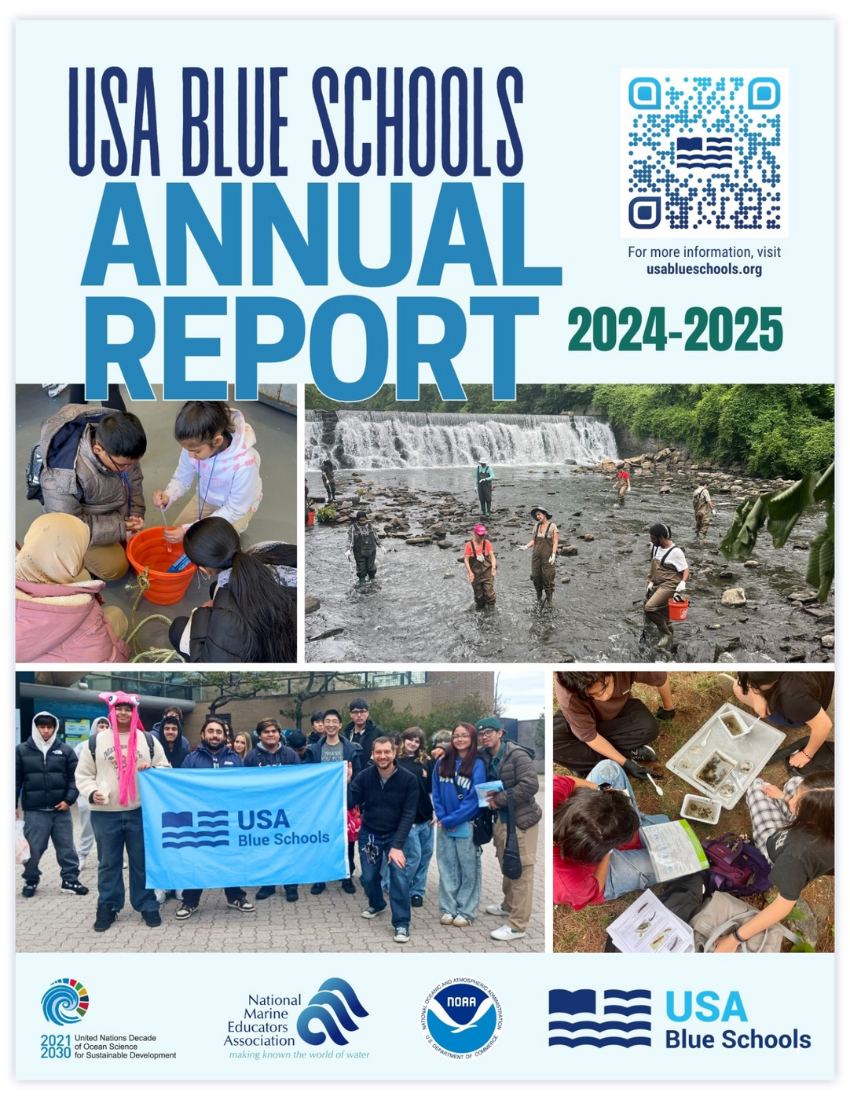
The USA Blue Schools Network continues to grow as a powerful model for integrating ocean literacy into K-12 education. The 2024-2025 Annual Report highlights a school year of meaningful learning, student-led action, and expanding partnerships that connect classrooms to local watersheds and the global ocean.
A Milestone Year for USA Blue Schools
During the 2024-2025 academic year, 43 schools across seven states were recognized as USA Blue Schools, engaging 6,096 students, 227 teachers, and 69 community partners. Through interdisciplinary, inquiry-based learning, students explored the connections between their communities, inland waters, and the ocean while taking real action to protect aquatic ecosystems.
This year also marked an important milestone: USA Blue Schools became a UN Ocean Decade-endorsed project, joining a global network of approximately 60 countries committed to advancing ocean literacy and stewardship worldwide.
Learning That Leads to Action
At the heart of the USA Blue Schools model are student action projects. Across the network, students designed and carried out projects that addressed real-world environmental challenges, including:
Monitoring microplastics in rivers and coastal waters
Conducting water quality testing to support local conservation efforts
Building and deploying underwater ROVs to explore marine habitats
Creating watershed models and public exhibits to educate their communities
Teachers consistently reported increased student engagement, deeper systems thinking, and a shift from passive learning to active environmental stewardship.
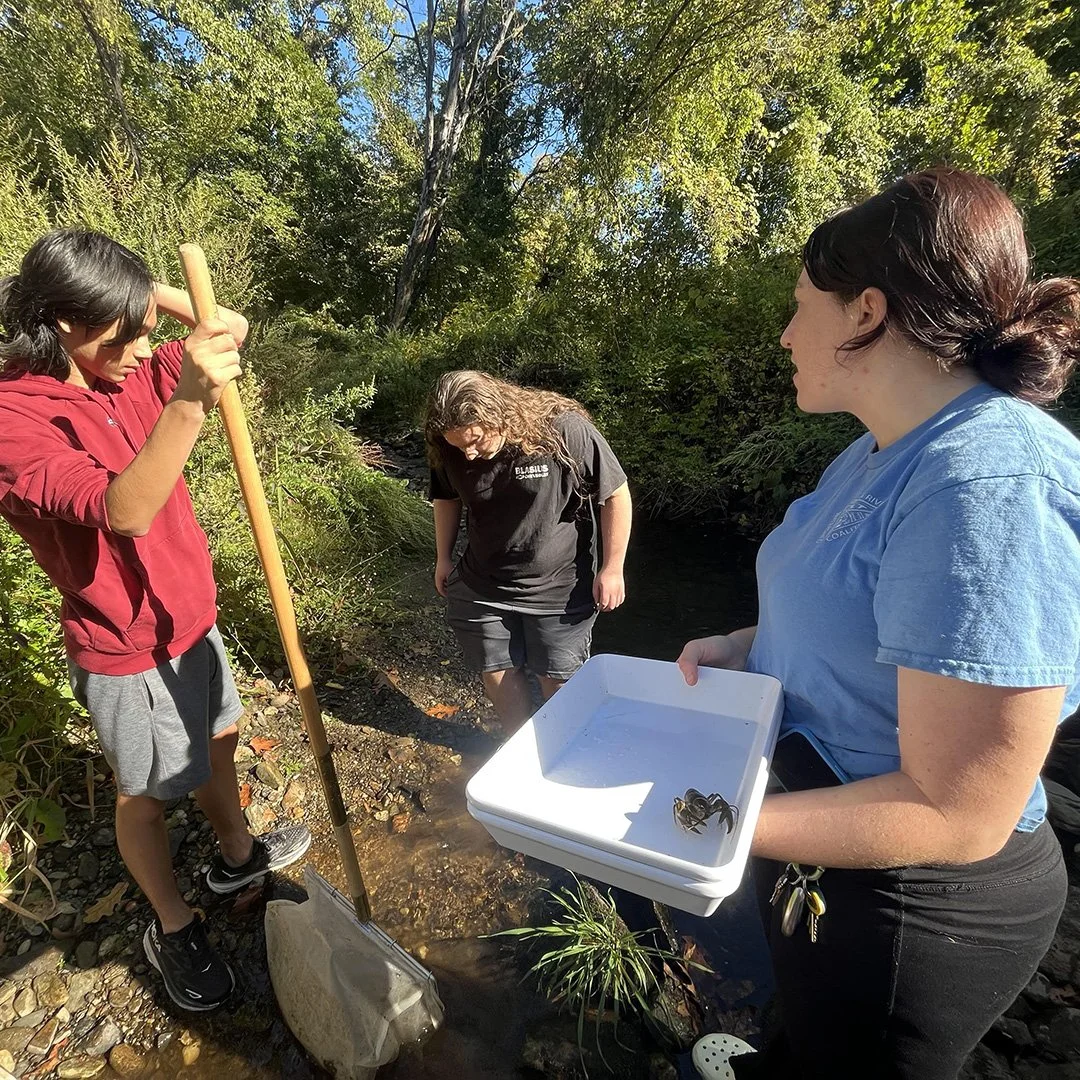
Thomaston High School students conducted biological surveys in the Translyvania River.
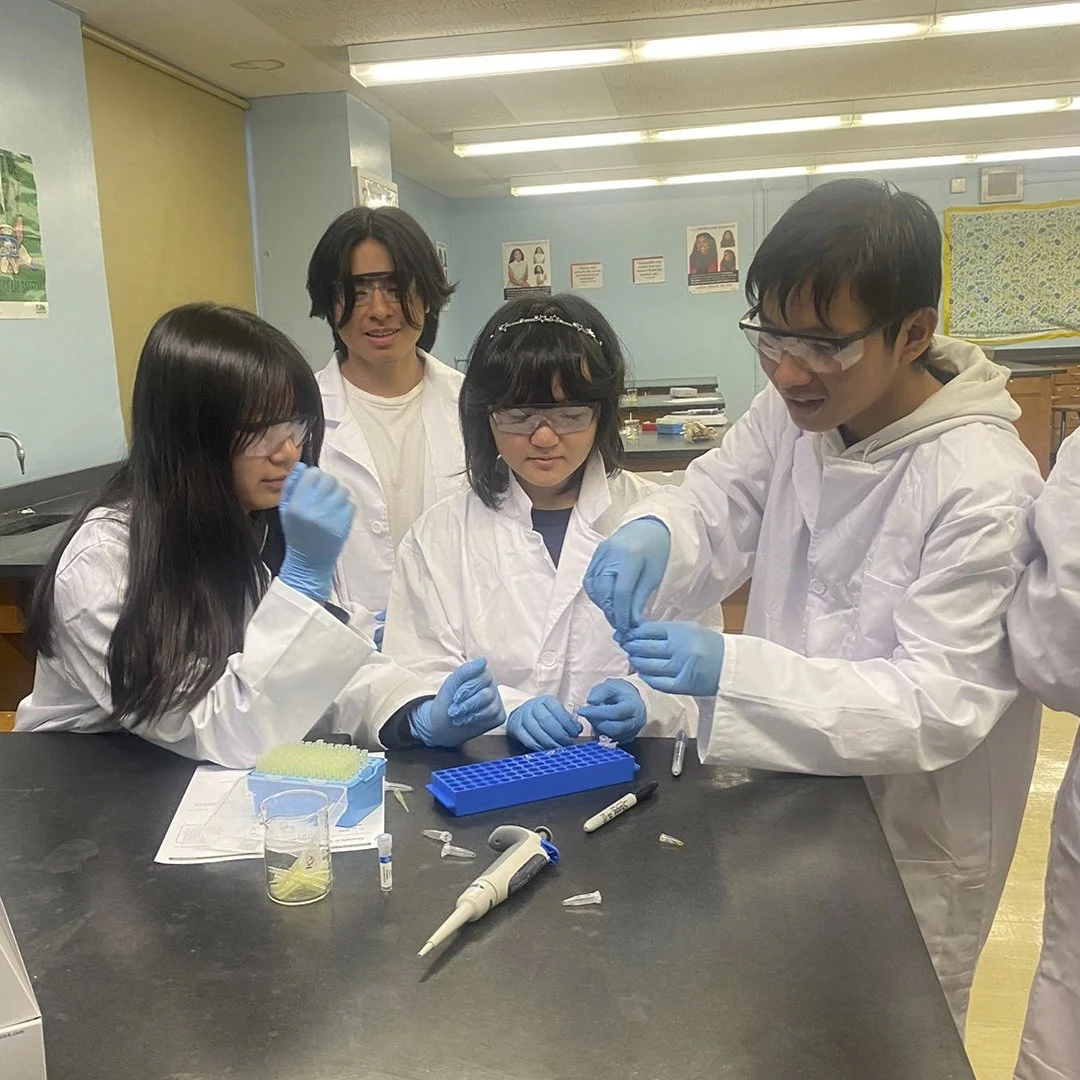
Students from Susan E. Wagner High School (NY), learned about and used biotechnology to examine eDNA from biological and water samples. Photo by Justin Grimm-Greenblatt
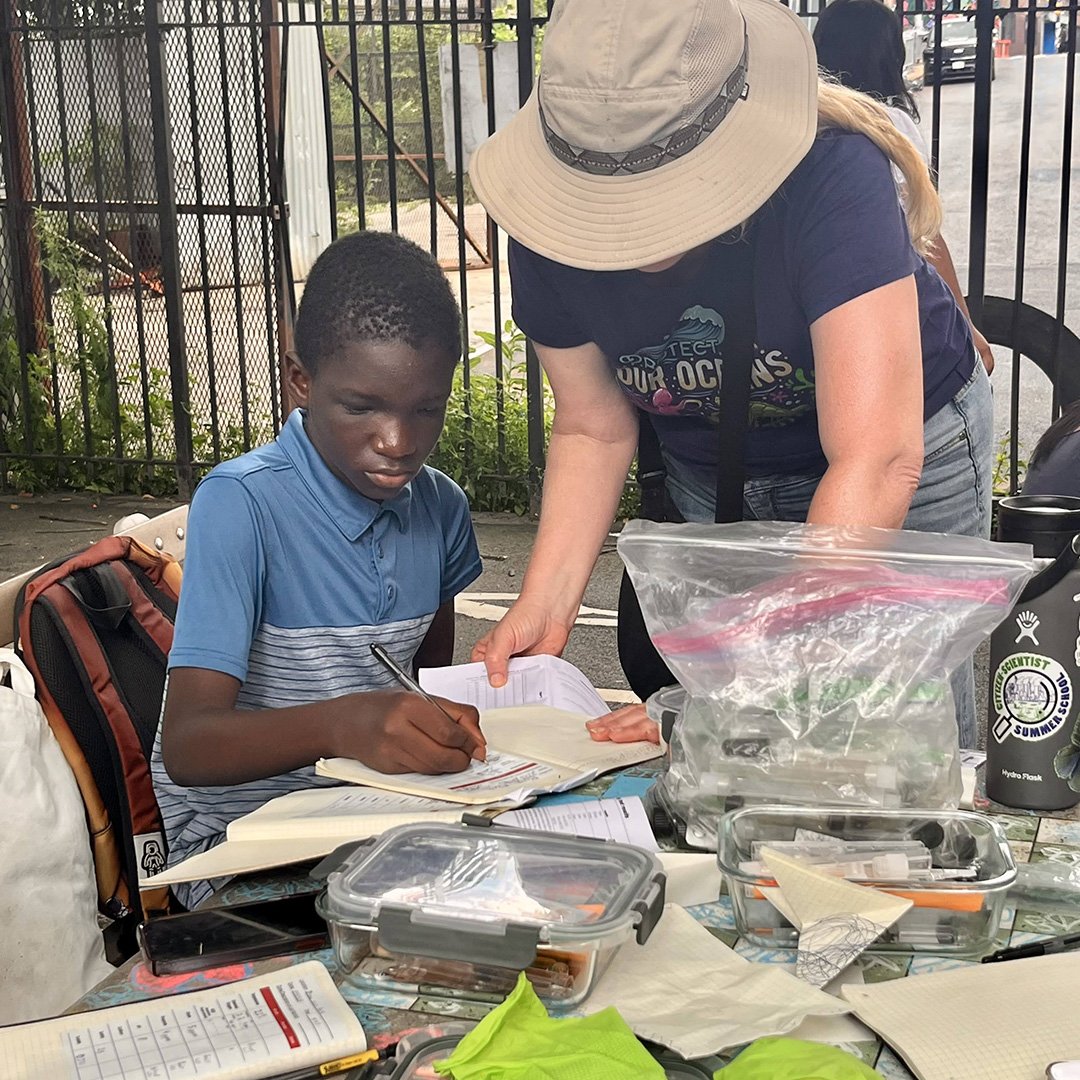
Ms. Stanton, English as a New Language (ENL) teacher, helps a Blue Schools student interpret his water quality data. Photo by Meghan Marrero
Professional Learning and Teacher Collaboration
USA Blue Schools teachers participated in quarterly professional learning sessions, connecting with ocean scientists, education leaders, and fellow educators. These sessions supported teachers in strengthening ocean literacy instruction and provided access to high-quality resources from organizations such as NMEA, Sea Grant, and EarthEcho International.
Teachers also shared their work at local, regional, national, and international conferences, demonstrating how the Blue Schools framework supports rigorous science learning, equity, and community engagement.
Students Sharing Their Learning
Student voice was front and center throughout the year. USA Blue Schools students presented their work at in-person and virtual symposia, including the Long Island Sound Student Symposium and the annual USA Blue Schools Online Symposium. These events gave students authentic opportunities to communicate their findings, learn from peers, and engage with scientists and community members.
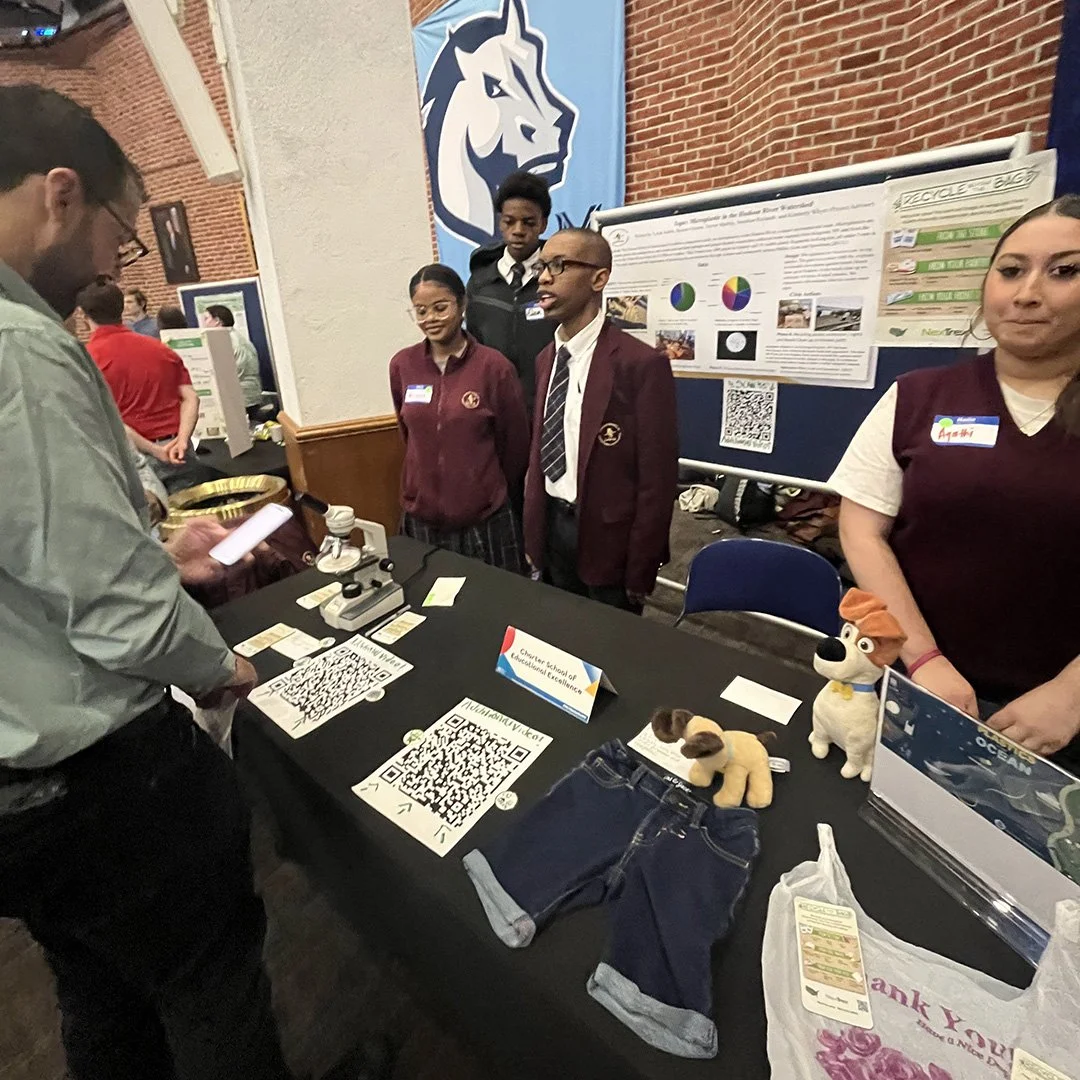
CSEE Students demonstrated common sources of microplastics in waterways.
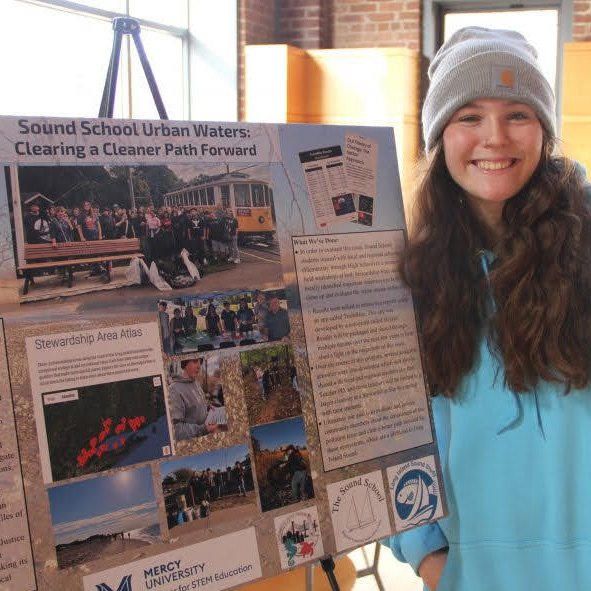
A student from The Sound School in New Haven, CT, presenting a poster. Photo by Judy Benson, CT Sea Grant
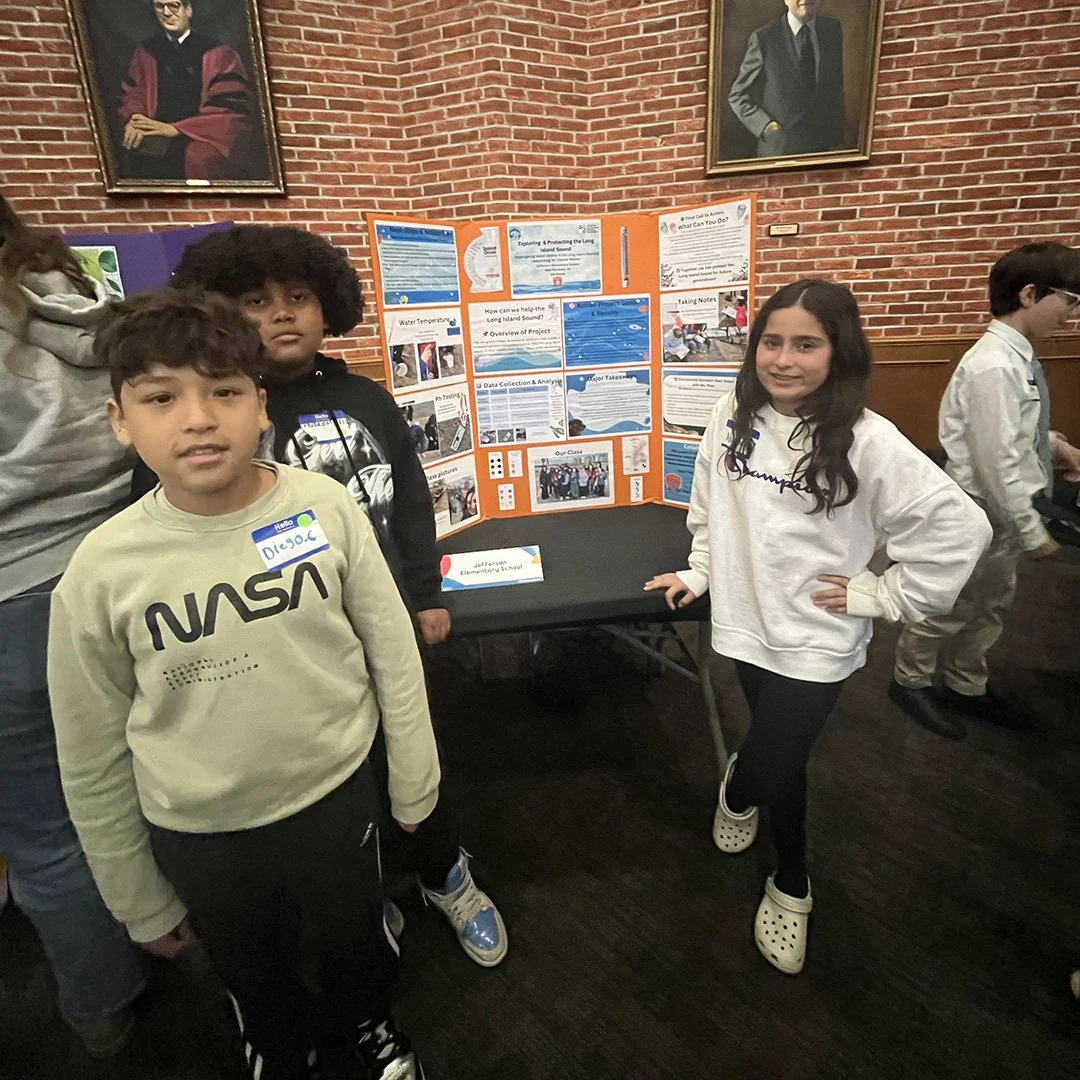
Jefferson Elementary School showed how they assessed water quality at a local park, located on Long Island Sound.
Powered by Partnerships
The success of USA Blue Schools is made possible through strong partnerships. During 2024–2025, schools collaborated with aquariums, museums, NGOs, government agencies, Tribal and Indigenous organizations, universities, and local businesses. Targeted funding from partners such as SEA BEYOND and the Long Island Sound Partnership supported transportation, materials, field experiences, and teacher planning time, ensuring equitable access to hands-on ocean learning.

Looking Ahead
As the USA Blue Schools Network continues to expand, the program remains committed to its core belief: that fostering ocean literacy through education and action strengthens communities and contributes to the health of our global ocean.
Read the full USA Blue Schools 2024–2025 Annual Report to explore detailed stories, data, and reflections from students, teachers, and partners across the country.
Interested in becoming a USA Blue School? Learn more and apply at usablueschools.org.